For The Stranger by Albert Camus, I mainly plan to tab by motifs, this seemed to work well when tabbing Their Eyes Were Watching God and I think that now that I have had some practice and will know what to look for it will be much easier to tab.
My first three tabs (blue, green and yellow) will be dedicated to the tabbing of motifs within the stranger. These motifs will be determined as I read through the book and may include (but are not limited to) Meresault's use of racial identification (as in the case of the Arabs), sleep and other forms of escapism from emotional thoughts and Meresault's indifference to religion.
My fourth tab (Orange) will be focused on the use of literary techniques within Camus' writing (or lack thereof) including diction, parallelism, sentence structure and figurative language.
The fifth and final tab (Red) will be dedicated to a variety of things that do not fit with other tabbing sections, this includes important passages, characterization and lines or passages important to the development of theme.
Monday, February 28, 2011

Wednesday, February 23, 2011
Their Eyes Were Watching God - Journal 10
Note: This journal is late because I was in Las Vegas without Internet connection. Journal was copied directly from English notebook.
Journal: Identify a theme within Their Eyes Were Watching God (if you know it still has some weaknesses, make a list of questions or concerns you have about your theme below it - it doesn't have to be perfect yet). Be sure your theme is something that you can commit to writing your own vignette around. Make a list of quotes that inform that theme. Be sure to record the page number and take note of any techniques and or elements present within the quote.
Theme: Individuals who attempt to upset the structure of societal standing ultimately end up isolating themselves.
Questions:
Journal: Identify a theme within Their Eyes Were Watching God (if you know it still has some weaknesses, make a list of questions or concerns you have about your theme below it - it doesn't have to be perfect yet). Be sure your theme is something that you can commit to writing your own vignette around. Make a list of quotes that inform that theme. Be sure to record the page number and take note of any techniques and or elements present within the quote.
Theme: Individuals who attempt to upset the structure of societal standing ultimately end up isolating themselves.
Questions:
- Is this theme too broad?
- Does "upset" work in the sentence?
- "Janie was standing by the stove washing up the dishes when he spoke to her in a queer, cold voice" (p.183)
- "But anyway, she went down the road behind him that night feeling cold. He strode along invested with his new dignity, thought and planned out loud, unconscious of her thoughts." (p.43)
- Repetition of the word cold creates a feeling of separation, isolation.
- "They murmured hotly about slavery being over, but every man filled his assignment." (p.47)
- "Take for instance that new home of his. [...] It made the village feel funny talking to him. (p.80)
- "If Ah kin haul de wood heuh and chop it fuh yuh, look lak you oughta be able to tote it inside. Mah fust wife never bothered me 'bout choppin' no wood no how." (p.27)
- "You got uh town so you freed uh mule. You have tuh power tuh free things and dat makesyou lak a king uh something."(p.58)
- "There was nothing to do in life anymore. Ambition was useless. And the cruel deceit of Janie! Laughing at him, and now putting the town up to do the same."(p.80)
Wednesday, February 16, 2011
Their Eyes Were Watching God - Journal 9
Journal #9: Write a pastiche of Hurston by duplicating a theme that she uses and three stylistic elements. Use these elements with your own characters, setting, and conflict. After you finish your pastiche clarify what theme and techniques you used and how they were used in a way that mirrors Hurston's own use of them.
"Anne."
"Yeh Georgia?"
"Yuh done been mah friend right near ten years."
"Ah 'pose it been 'bout that."
"Welh Anne, ah'm worried 'bout Jake."
"Whuts about? He workin' hard."
"Yeh, and ah'm mighty grateful fo' dat, Anne. But he git futhah way from me every day."
"What'ch yuh mean Georgia?"
"He done be workin' dose fields all da time. He plow da field. He plant da seeds. He reap da crops. He take him'n his mule down tuh mahket. Feel lak he ain't got no mo' time fo' romancin'."
"But he doin' so well Georgia! Yuh be able to 'ford some land soon. Yuh inna mighty fine place right now."
"Ah kno' Anne. But it feel lak the mo' money we has, de poorer we gets."
"why dontcha just talk witem Georgia?"
"He ain't got no time fo' talking, be working dem fields till da day he die."
In this pastiche I attempted to mimic Hurston's use of dialect. When Hurston uses dialect there is never speaker tags and the speaker is instead identified through each character addressing the other by name. I also tried to mirror the use of a confidant and the use of short, repetitive sentence structure to enhance the feeling that time is passing. Overall I wanted to mirror one of Hurston's themes (people who attempt to advance themselves through society in a capitalistic system end up isolating themselves.) in my pastiche.
"Anne."
"Yeh Georgia?"
"Yuh done been mah friend right near ten years."
"Ah 'pose it been 'bout that."
"Welh Anne, ah'm worried 'bout Jake."
"Whuts about? He workin' hard."
"Yeh, and ah'm mighty grateful fo' dat, Anne. But he git futhah way from me every day."
"What'ch yuh mean Georgia?"
"He done be workin' dose fields all da time. He plow da field. He plant da seeds. He reap da crops. He take him'n his mule down tuh mahket. Feel lak he ain't got no mo' time fo' romancin'."
"But he doin' so well Georgia! Yuh be able to 'ford some land soon. Yuh inna mighty fine place right now."
"Ah kno' Anne. But it feel lak the mo' money we has, de poorer we gets."
"why dontcha just talk witem Georgia?"
"He ain't got no time fo' talking, be working dem fields till da day he die."
In this pastiche I attempted to mimic Hurston's use of dialect. When Hurston uses dialect there is never speaker tags and the speaker is instead identified through each character addressing the other by name. I also tried to mirror the use of a confidant and the use of short, repetitive sentence structure to enhance the feeling that time is passing. Overall I wanted to mirror one of Hurston's themes (people who attempt to advance themselves through society in a capitalistic system end up isolating themselves.) in my pastiche.
Their Eyes Were Watching God - Journal 8
Journal #8: Find quotations for three different stylistic attributes of Hurston's writing. Explain the context of the passage (where does it occur in the book, what is happening, who is involved). Identify and describe the literary technique used in the the passage, and explain how you think it affects the text and how you read it.
"It sho is. Still Ah ain't Mis' Tyler and Tea Cake ain't no Who flung, and he ain't no stranger tuh me. We'se just as good as married already. But Ah ain't puttin' it in de street. Ah'm tellin' you" (p.114)
"It sho is. Still Ah ain't Mis' Tyler and Tea Cake ain't no Who flung, and he ain't no stranger tuh me. We'se just as good as married already. But Ah ain't puttin' it in de street. Ah'm tellin' you" (p.114)
- This quotation takes place during the end of Tea Cake's courtship of Janie. Pheoby, Janie's friend inquires into the relationship between the two, warning her that Tea Cake may be using her and that relationship is seen as improper by others in the community. In response Janie tells Pheoby about her relationship with Tea Cake and their future plans. Here, Zora Neale Hurston makes use of Pheoby, a minor character with the sole distinguishing feature of being Janie's friend, as a confidant for Janie. This allows the thoughts of Janie about Tea Cake to be revealed without Janie having to talk to him or just have the thoughts alone. This also sets a framework for the book and adds to its circular nature, the beginning of the book has Janie arriving back in Eatonville and finding Pheoby to whom she begins to tell her life story.
- After Janie's intimate moments with Tea Cake throughout the eleventh chapter, he leaves for a number of days and does not return. Janie expresses doubt and uncertainty of her feelings for him as well a fear that he will not return. When he does, Hurston uses a paradoxical statement to express the nature of their relationship. At first it may seem contradictory for Janie to both adore and hate Tea Cake, it really defines how Janie views her interactions with Tea Cake. Hurston possibly could have used this to parallel an internal conflict within Janie. The rules of society and of the community that judges her is coming into conflict for her attraction to Tea Cake and the freedom that he brings.
- This passage comes after Janie and Tea Cake attend the picnic and summarizes the events of the following weeks. Although it may not seem important and mostly there to move the plot, Hurston's use of syntax allows it to show the community's opinion on Janie and Tea Cake's relationship. The use of simple repetitive sentences gives the passage a tone of annoyance, as if someone is listing all of the things Janie and Tea Cake are doing that they should not. Furthermore the choppy sentences help to emphasize the passing of time and the short installments that we see of their relationship.
Monday, February 14, 2011
Their Eyes Were Watching God - Journal 7
Journal #7: create a pastiche, matching Hurston' style and themes as closely as possible. After you complete your pastiche, write a statement explaining some of the decisions you made in order to match Hurston's writing and objectives.
And thus George started to reflect on Fear. Fear, that ancient companion with deep unnerving eyes who brooded just beyond reach. The primal one who lived on the whisperings of the wind, and in the whisper of a thought.What desire has Fear for physicality, and what rationalizations can hold him back? He waits in his web of shadows that surround the mind. Waits silently and patiently for the creeping of doubt to call him forth. Been waiting there since the first thought, the first action, the first night. He knew he too would soon hear the skittering of his eight legs soon enough. He was cold and alone too. God-forsaken Lennie! He ain't got no need to battle by his lonesome. He offered a last evening of food and of light, but Lennie refused. These folk wuz right about the weather, but they wuz ignorant of his ability. He would weather the storm and put up the light as long as his poor boat could hold together. That was the idea in his head. But the driftwood rising with the monstrous swells told a different story, and so he could tell. And regardless, the coming of morning would reveal the truth, for fog began to gather among the rocks and shoals. Wood that had never yet come with the tide before collected in the water just off shore under circling gulls. Floated, broken and mangled, in the now calm waves. Duty, that buzzing insect, had gone and left an eerie silence on the beach.
I actually had a very hard time writing in the style of Zora Neale Hurston. I found it difficult to write in a tone and voice that was fundamentally different than my own. Other than the use of the same sort of sentence structure, I tried to keep some of the motifs that Hurston uses such as eyes and birds accompanying death. I attempted to keep the same sort of tone of detached emotion and sadness from the original passage but I feel that was met with mixed success.
And thus George started to reflect on Fear. Fear, that ancient companion with deep unnerving eyes who brooded just beyond reach. The primal one who lived on the whisperings of the wind, and in the whisper of a thought.What desire has Fear for physicality, and what rationalizations can hold him back? He waits in his web of shadows that surround the mind. Waits silently and patiently for the creeping of doubt to call him forth. Been waiting there since the first thought, the first action, the first night. He knew he too would soon hear the skittering of his eight legs soon enough. He was cold and alone too. God-forsaken Lennie! He ain't got no need to battle by his lonesome. He offered a last evening of food and of light, but Lennie refused. These folk wuz right about the weather, but they wuz ignorant of his ability. He would weather the storm and put up the light as long as his poor boat could hold together. That was the idea in his head. But the driftwood rising with the monstrous swells told a different story, and so he could tell. And regardless, the coming of morning would reveal the truth, for fog began to gather among the rocks and shoals. Wood that had never yet come with the tide before collected in the water just off shore under circling gulls. Floated, broken and mangled, in the now calm waves. Duty, that buzzing insect, had gone and left an eerie silence on the beach.
I actually had a very hard time writing in the style of Zora Neale Hurston. I found it difficult to write in a tone and voice that was fundamentally different than my own. Other than the use of the same sort of sentence structure, I tried to keep some of the motifs that Hurston uses such as eyes and birds accompanying death. I attempted to keep the same sort of tone of detached emotion and sadness from the original passage but I feel that was met with mixed success.
Sunday, February 13, 2011
Their Eyes Were Watching God - Journal 6
Journal #6: Read closely Janie's description of Death in chapter 8. Make a list of the stylistic choices Hurston makes in the passage. Along with listing the decisions Hurston makes in this passage, identify the effect of each of each of these decisions. You can do this in list form: technique/stylistic choice, effect, technique, effect, etc
Death, that strange being with the huge square toes who lived way in the West. The great one who lived in the straight house like a platform without sides to it, and without a roof. What need has Death for a cover, and what winds can blow against him? He stands in his high house that overlooks the world. Stands watchful and motionless all day with his sword drawn back, waiting for the messenger to bid him come. Been standing there before there was a where or a when or a then. She was liable to find a feather from his wings lying in her yard any day now. She was sad and afraid too. Poor Jody! He ought not to have to wrassle in there by himself. She sent Sam in to suggest a visit, but Jody said No. These medical doctors wuz all right with the Godly sick, but they didn't know a thing about a case like his. He'd be all right just as soon as the two-headed man found what had been buried against him. He wasn't going to die at all. That was what he thought. But Sam told her different, so she knew. And then if he hadn't, the next morning she was bound to know, for people began to gather in the big yard under the palm and china-berry trees. People who would not have dared to foot the place before crept in and did not come to the house. Just squatted under the trees and waited. Rumor, the wingless bird, had shadowed over the town. (p.84)
- The contrast between the use of more eloquent/academic and spiritual language while talking about death with small portions of Janie's dialect in the middle of the passage while she talks about Jody creates a feeling of distinction between life and death and emphasizes the transition between the two.
- Hurston capitalizes the word "Death" which implies that it is a name. This personifies Death, making it feel as though it is a person rather than an event. The capitalization of the word also gives a greater feeling of importance and weight to death.
- Hurston emphasizes how "Death" is different and strange. ("strange being with the huge square toes") This brings into focus the unknown quality that death has. People know of it but it is still strange mysterious to them.
- The motif of power and control reappears in this passage. Death is personified as being powerful, "what winds can blow against him" as well as above normal humans "his high house that overlooks the world"/description of having wings would mean death is above the earth on which humans exist. This gives death a feeling of control over all people, even Jody who had more power than anyone in Eatonville, and reaffirms the idea of structures of power that people live under.
- in the passage, Hurston does not use any direct dialogue in the present tense, instead she has it occur in the past. This gives a feeling of emotional detachment from what is happening to Jody.
- The motif of "Trees" is reused, although there is no direct comparison or description of the trees, the idea that people are like trees follows from early in life up into death.
- Hurston again uses ambiguous terms in her descriptions, she does not refer to people by name or make direct allusions to events, making the reader want more information and allows a more broad understanding and application of what she says.
- Hurston repeats the idea of those who are under the control or power of others coming out when that power begins to wane. It was seen in the first passage of the book with people coming out as the sun and "bossman" leave, and is seen here when "People who would not have dared to foot the place before crept in and did not come to the house." The appearance of those without power can be seen to show people's desire for control, especially when they have none.
- Personification of the word "Rumor" through the use of capitalization. This gives the impression that a rumor is more human, having ideas and control of its own. The comparison of it to a bird parallels in part the description of death, making a rumor seem above human control.
Their Eyes Were Watching God - Journal 5
Journal #5: Post your thesis statement. Be sure it addresses what stylistic choice Hurston made, what the effect of that choice is, and why she would create that effect.
Zora Neale Hurston makes use of a change in chronological order (telling the story from the end in flashbacks) to create a sense of confidence and finality within Janie, thus showing how each event in a person's life builds and develops their attitudes and beliefs while moving towards an acceptance of self.
3 Comment: Visit three blogs and give them some feedback that will help them refine and clarify their thesis statement. You can ask a question or point out a portion of the book that contradicts or clarifies what they are saying. You can offer a rewording that would clarify their point.
Comments on: Andy Luu, Matt Merckling and Cara Mitchell
Zora Neale Hurston makes use of a change in chronological order (telling the story from the end in flashbacks) to create a sense of confidence and finality within Janie, thus showing how each event in a person's life builds and develops their attitudes and beliefs while moving towards an acceptance of self.
3 Comment: Visit three blogs and give them some feedback that will help them refine and clarify their thesis statement. You can ask a question or point out a portion of the book that contradicts or clarifies what they are saying. You can offer a rewording that would clarify their point.
Comments on: Andy Luu, Matt Merckling and Cara Mitchell
Thursday, February 10, 2011
Their Eyes Were Watching God - Journal 4
Identify three patterns that appear in these chapters (but may extend through the entire book) and record the examples for each (include page numbers)
1. A recurring image seems to be the sun, specifically the sun in how it is described as having power and control over people due to the giving of light. This is first seen in the very first page of the book "But now, the sun and the bossman were gone, so the skins felt powerful and human." (p.1) This also appears in the fifth chapter of the book during the lamp lighting ceremony. "Folkses, de sun is goin' down. [...] Us poor weak humans can't do nothin' tuh hurry it up nor slow it down." (p. 45)
2. A second pattern I seemed to notice is the description of people as animals. It shows up in chapter six when describing the Eatonville residents' reactions to Joe and Janie's new home. "It was like seeing your sister turn into the 'gator. A familiar strangeness." (p. 48) Just like the first pattern, it appears in the opening page of the book. "Mules and other brutes had occupied their skins" (p.1)
3. Finally, a recurring idea seems to be the word "bloom" as Janie's representation of love and marriage, rather than just blossoming as it is typically used. It is first used when Janie has her "revelation" under the pear tree. "She saw a dust-bearing bee sink into the sanctum of a bloom; [...] So this was a marriage!" (p.11) Then later Hurston uses the word bloom in a way that makes little sense if thought of as blossoming/growing. "It must have been the way Joe spoke out without giving her a chance to say anything one way or another that took the bloom off of things." (p.43)
1. A recurring image seems to be the sun, specifically the sun in how it is described as having power and control over people due to the giving of light. This is first seen in the very first page of the book "But now, the sun and the bossman were gone, so the skins felt powerful and human." (p.1) This also appears in the fifth chapter of the book during the lamp lighting ceremony. "Folkses, de sun is goin' down. [...] Us poor weak humans can't do nothin' tuh hurry it up nor slow it down." (p. 45)
2. A second pattern I seemed to notice is the description of people as animals. It shows up in chapter six when describing the Eatonville residents' reactions to Joe and Janie's new home. "It was like seeing your sister turn into the 'gator. A familiar strangeness." (p. 48) Just like the first pattern, it appears in the opening page of the book. "Mules and other brutes had occupied their skins" (p.1)
3. Finally, a recurring idea seems to be the word "bloom" as Janie's representation of love and marriage, rather than just blossoming as it is typically used. It is first used when Janie has her "revelation" under the pear tree. "She saw a dust-bearing bee sink into the sanctum of a bloom; [...] So this was a marriage!" (p.11) Then later Hurston uses the word bloom in a way that makes little sense if thought of as blossoming/growing. "It must have been the way Joe spoke out without giving her a chance to say anything one way or another that took the bloom off of things." (p.43)
Their Eyes Were Watching God - Journal 3
Journal #3: Step 1-research a prominent figure from the Harlem Renaissance and write a short summary of who they are. Step 2-make a list of rules for a dialect of your creation (at least 3 for each category: pronunciation, grammar, and vocabulary). Step 3-pick a setting and create a dialogue between your historical figure and your imaginative figure using at least seven exchanges and correctly punctuated speaker tags.
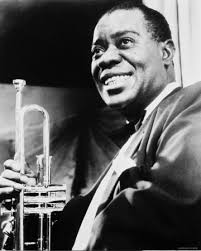 A jazz musician born in New Orleans, Louis Armstrong was one of the single greatest influences on jazz music from the 1920's onward. As both a singer and trumpet player he rose to prominence in Chicago's jazz scene through his inventive, improvised solos that began to shift jazz as a whole to focus on individual talent and creativity. Touring in New York, Chicago and New Orleans, Louis became one of the leading figures in jazz, finding success with both white and black audiences. After the end of the Harlem Renaissance he continued his musical career through the 1960's, recording his most popular works which he is known for today, such as "What a Wonderful World".
Dialect Rules
Pronunciation:
D- changes to Th- (Down - Thown)
-at changes to -ut (What - Whut)
In most cases S changes to Z (This - Thiz)
Grammar:
Refer to self in third person
"and" is unused (replaced by a comma)
No use of past tense
Vocabulary:
Hotzide - down, below ground
Coldzide - up, above ground
Nobbing - eating
Louis Armstrong walked down the dimly lit alley with his trumpet case tucked securely under one arm. He entered a low doorway to his left, believing it to be the house of a band mate who had offered a bed and hot meal. Instead, the door led to stairs and a dark cellar from which a dull crunching noise emanated. Unsure of what could be making such a noise, Louis called out,
"Hello, anyone there?" To his surprise, a deep, rumbling voice returned his inquiry from the dark,
"Juzt Thragg, zitting, nobbing."
"Nobbing?" asked Louie, the crunching had ceased and Louis could begin to make out a small and oddly proportioned figure squatting in the corner of the cellar.
"Yez, nobbing a rut" Thragg answered.
"What are you?" asked Louie in fascination, "Are you alone?"
"Thragg iz Thwarfz. Throgg, Thrup went hotzide to thig. Thragg come coldzide to nobb." grumbled Thragg. As his eyes adjusted, Louis made out a gaping hole in the wall near Thragg's position.
"Did you make that?" Louis inquired, gesturing in the hole's general direction.
"Yez, Thragg thig thuring thay, nobb at night." Thragg replied, and then with sudden interest called out to Louis "Whut are you thoing here? Only Thragg comez here."
"I'm Louis, I just took a wrong turn down an alley." said Louis warily, he could now see Thragg's eyes hungrily staring at him from the darkness.
"Thragg hungry, Louiz have zomething thut Thragg can nob?" said Thragg.
"Not unless you like cold metal trumpets for dinner." Louis answered with a nervous chuckle, Thragg had stood began slowly shuffling toward him.
"Thragg like metal very much, find it hotzide, give Tragg thut trumpet to nobb" Thragg said as continued his uneven advance toward Louis.
"No, I need this, and I best be going now." Louis did not wait for a response, quickly exiting the door and walking briskly out the alley.
Louis Armstrong
Dialect Rules
Pronunciation:
D- changes to Th- (Down - Thown)
-at changes to -ut (What - Whut)
In most cases S changes to Z (This - Thiz)
Grammar:
Refer to self in third person
"and" is unused (replaced by a comma)
No use of past tense
Vocabulary:
Hotzide - down, below ground
Coldzide - up, above ground
Nobbing - eating
Louis Armstrong walked down the dimly lit alley with his trumpet case tucked securely under one arm. He entered a low doorway to his left, believing it to be the house of a band mate who had offered a bed and hot meal. Instead, the door led to stairs and a dark cellar from which a dull crunching noise emanated. Unsure of what could be making such a noise, Louis called out,
"Hello, anyone there?" To his surprise, a deep, rumbling voice returned his inquiry from the dark,
"Juzt Thragg, zitting, nobbing."
"Nobbing?" asked Louie, the crunching had ceased and Louis could begin to make out a small and oddly proportioned figure squatting in the corner of the cellar.
"Yez, nobbing a rut" Thragg answered.
"What are you?" asked Louie in fascination, "Are you alone?"
"Thragg iz Thwarfz. Throgg, Thrup went hotzide to thig. Thragg come coldzide to nobb." grumbled Thragg. As his eyes adjusted, Louis made out a gaping hole in the wall near Thragg's position.
"Did you make that?" Louis inquired, gesturing in the hole's general direction.
"Yez, Thragg thig thuring thay, nobb at night." Thragg replied, and then with sudden interest called out to Louis "Whut are you thoing here? Only Thragg comez here."
"I'm Louis, I just took a wrong turn down an alley." said Louis warily, he could now see Thragg's eyes hungrily staring at him from the darkness.
"Thragg hungry, Louiz have zomething thut Thragg can nob?" said Thragg.
"Not unless you like cold metal trumpets for dinner." Louis answered with a nervous chuckle, Thragg had stood began slowly shuffling toward him.
"Thragg like metal very much, find it hotzide, give Tragg thut trumpet to nobb" Thragg said as continued his uneven advance toward Louis.
"No, I need this, and I best be going now." Louis did not wait for a response, quickly exiting the door and walking briskly out the alley.
Wednesday, February 9, 2011
Their Eyes Were Watching God-Journal 2
Journal #2 (Analytic): Pick a passage from your reading (between one paragraph and half a page). Copy the passage onto your blog and make a list of the decisions that Hurston made in writing that passage. What techniques, what patterns, what questions, what tone, what word choice, etc.
After a while she got up from where she was and went over the little garden field entire. She was seeking confirmation of the voice and vision, and everywhere she found and acknowledged answers. A personal answer for all other creations except herself. She felt and answer seeking her, but where? When? How? She found herself at the kitchen door and stumbled inside. In the air of the room were flies tumbling and singing, marrying and giving in marriage. When she reached the narrow hallway she was reminded that he grandmother was home with a sick headache. She was lying across the bed asleep so Janie tipped on out the front door. Oh to be a pear tree- any tree in bloom! With kissing bees singing of the beginning of the world! She was sixteen. She had glossy leaves and bursting buds and she wanted to struggle with life but it seemed to elude her. Where were the singing bees for her? Nothing on the place nor in her grandmother's house answered her. She searched as much of the world as she could from the top of the front steps and then went on down to the front gate and leaned over to gaze up and down the road. Looking, waiting, breathing short with impatience. Waiting for the world to be made. (pg 11)
After a while she got up from where she was and went over the little garden field entire. She was seeking confirmation of the voice and vision, and everywhere she found and acknowledged answers. A personal answer for all other creations except herself. She felt and answer seeking her, but where? When? How? She found herself at the kitchen door and stumbled inside. In the air of the room were flies tumbling and singing, marrying and giving in marriage. When she reached the narrow hallway she was reminded that he grandmother was home with a sick headache. She was lying across the bed asleep so Janie tipped on out the front door. Oh to be a pear tree- any tree in bloom! With kissing bees singing of the beginning of the world! She was sixteen. She had glossy leaves and bursting buds and she wanted to struggle with life but it seemed to elude her. Where were the singing bees for her? Nothing on the place nor in her grandmother's house answered her. She searched as much of the world as she could from the top of the front steps and then went on down to the front gate and leaned over to gaze up and down the road. Looking, waiting, breathing short with impatience. Waiting for the world to be made. (pg 11)
- Second sentence makes allusion to god or some sort of religious experience, the "voice and vision" from which she received her revelations
- Use of ambiguity, unknown to the reader both what the answers are that Janie is finding, and what the question that those answers are answering.
- Short series of questions parallel an earlier passage ( pg 10)
- Repetition of the word and idea of marriage and the idea of marrying in both this passage and the previous one.
- Repetition of the idea of blossoming and growing- bloom, bursting buds.
- Personification of the bees and flies- kissing and being married.
- Janie is symbolized by a growing tree, just beginning to blossom.
- Contrast between the personification of animals and nature in both this passage and the previous ones, and Janie's characterization/description as a non-human tree.
- "Singing of bees" symbol of love or marriage.
- Passage ends with short, choppy sentences that create anxiety.
- Overall, the passage is calm and almost detached from Janie, feels more ethereal or spiritual
Tuesday, February 8, 2011
Their Eyes Were Watching God-Journal 1
Journal #1 (Reflective): If you could tell your life story to one person, to whom would it be? Where would you begin (moment that changed your world view)?
If given the chance to tell my life story, I do not believe that who I told it would be of critical importance. Although in reality there is a good chance I would end up telling a close friend or family member who may have a more extensive knowledge of my background, I feel like the general point of telling this kind of story is much more introspective and I could tell my story to even a complete stranger. Through telling a story about my own life I would force myself to remember and consolidate the things that greatest affected me as I grew and developed as a person.Through facing these memories, both good and bad, you begin to come to an understanding of how much you have grown as a person. You do not often have an opportunity to reflect on yourself as a changing individual, and because of the very gradual shift in ideals and attitudes toward the world you may not notice how much you have progressed. Because of this I believe the value in telling your own life story is not what someone else takes from it, especially when it might be irrelevant and forgotten by them, but addressing your past and confirming who you are in the present.
The question of where to begin such a story is much harder to answer. I don't feel like my life, at least so far, has had many defining moments or periods of time that have drastically changed who I am as a person or how I view the world. If anything, my academic and social experiences through school have slowly changed my attitude about the world and myself. Thus, if I was telling my life story I would probably begin with my current thoughts and beliefs as a high school student, then work my way forward chronologically from my early years in elementary school and the experiences that shaped me. This way there would be a clear endpoint that my story steered toward, giving it some sort of direction as I told it.
If given the chance to tell my life story, I do not believe that who I told it would be of critical importance. Although in reality there is a good chance I would end up telling a close friend or family member who may have a more extensive knowledge of my background, I feel like the general point of telling this kind of story is much more introspective and I could tell my story to even a complete stranger. Through telling a story about my own life I would force myself to remember and consolidate the things that greatest affected me as I grew and developed as a person.Through facing these memories, both good and bad, you begin to come to an understanding of how much you have grown as a person. You do not often have an opportunity to reflect on yourself as a changing individual, and because of the very gradual shift in ideals and attitudes toward the world you may not notice how much you have progressed. Because of this I believe the value in telling your own life story is not what someone else takes from it, especially when it might be irrelevant and forgotten by them, but addressing your past and confirming who you are in the present.
The question of where to begin such a story is much harder to answer. I don't feel like my life, at least so far, has had many defining moments or periods of time that have drastically changed who I am as a person or how I view the world. If anything, my academic and social experiences through school have slowly changed my attitude about the world and myself. Thus, if I was telling my life story I would probably begin with my current thoughts and beliefs as a high school student, then work my way forward chronologically from my early years in elementary school and the experiences that shaped me. This way there would be a clear endpoint that my story steered toward, giving it some sort of direction as I told it.
Subscribe to:
Posts (Atom)